wireSTUDIO e-government solution
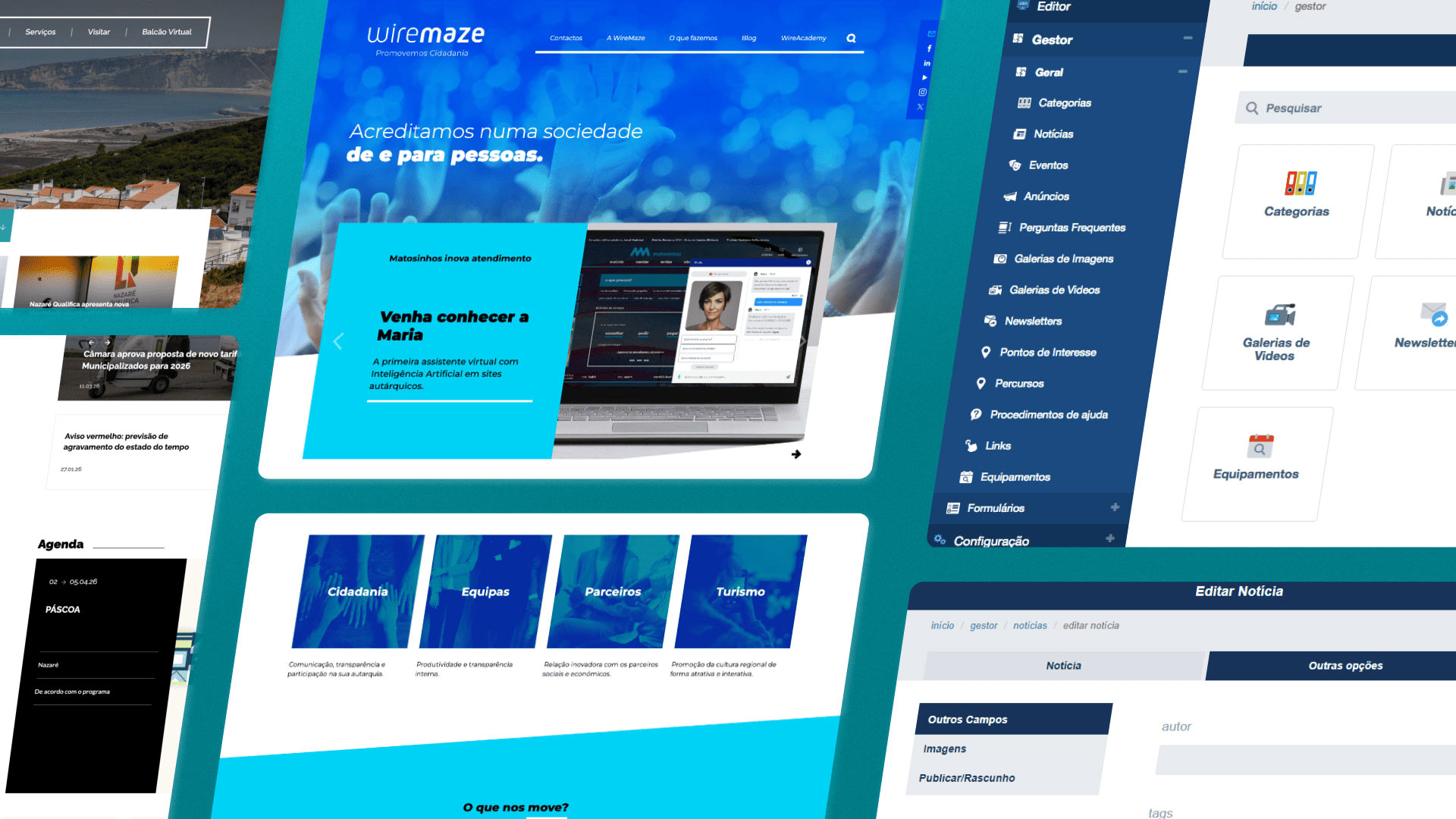
wireSTUDIO is an e-government platform and the leading content management system in Portugal, used by over 90 public sector organisations.
Due to confidentiality constraints, detailed product visuals cannot be shared. This case study focuses on my role in evolving the platform, with a strong emphasis on accessibility and scalable implementation.
Role
Design Engineer
Focus
Accessibility, responsive design, component-based architecture, and long-term product evolution
CONTEXT
wireSTUDIO is one of the core SaaS products developed by Wiremaze, used by the majority of municipalities in Portugal.
Given the complexity of public sector information architecture, alongside strict accessibility and data protection requirements, the platform needed to continuously evolve to meet growing demands.
PROBLEM
When I joined in 2014, the product was still in its early stages, and responsive web design was just emerging.
Over more than 8 years working on the platform, the key challenges were:
- Scalability. How to speed up implementation, standardise the frontend, and support faster delivery across multiple clients.
- Accessibility. Ensuring Web Content Accessibility Guidelines – WCAG 2.1 AA compliance across both the CMS and user-facing websites.
- Team growth. Onboarding and mentoring junior UX and frontend designers within a complex product environment.
SOLUTION
Scalability
With the rise of mobile usage, the platform needed to quickly adapt to responsive design.
- I co-led the migration of the frontend from custom CSS to a component-based architecture using Foundation. This improved UI consistency, enabled reuse of modular components, and significantly increased development efficiency.
- I also contributed to the design and implementation of reusable UI components to support scalability across projects.
Accessibility improvements
Accessibility was a core requirement for public sector products.
Websites built with wireSTUDIO consistently ranked in the top 10 of the Portuguese Municipalities Online Presence Index (IPIC). I contributed to this by:
- Continuously improving accessibility of the user-facing platform.
- Improving the platform itself and making accessibility more achievable by content managers. For example:
- designing input fields for video titles and transcript uploads;
- enabling accessible drag-and-drop workflows with proper labels and WAI-ARIA guidance;
- introducing fields for alt text on images.
I also conducted accessibility and responsiveness testing to ensure compliance and quality.
Team growth
I mentored junior designers and frontend developers through design feedbacks, code reviews, and hands-on guidance, helping them adopt best practices in accessibility, component-based design, and frontend implementation.
Role, Tools & technical skills
I worked at the intersection of design and engineering, translating UX decisions into scalable, production-ready frontend solutions.
I worked as part of a cross-functional team, closely collaborating with the Lead Product Designer and backend engineers.
Tools and technical skills: Adobe Illustrator, HTML5, CSS3, SCSS, Foundation, JavaScript, Ruby on Rails, Git, GitLab, accessibility testing.